
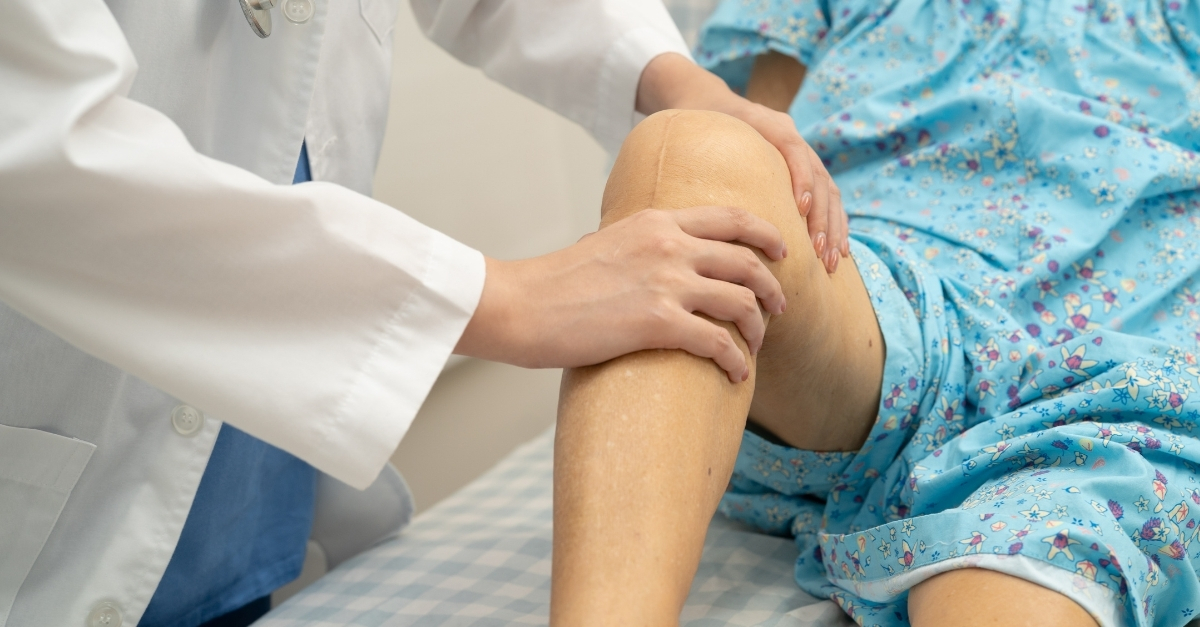
Knee & Hip Replacement in Turkey: The Complete 2026 Guide for International Patients
Can you have a knee or hip replacement in Turkey and return home to a good outcome? Yes — provided you choose a hospital that holds the T.C. Sağlık Bakanlığı Uluslararası Sağlık Turizmi Yetki Belgesi (Ministry of Health International Health Tourism Authorisation Certificate), verify JCI accreditation, and plan a realistic recovery timeline before you book.
Joint replacement surgery is one of the fastest-growing reasons international patients travel to Turkey. The clinical reason is straightforward: orthopaedic surgery requires high case volumes and specialist infrastructure, and Turkey's public and private hospital network has developed both. The practical reason is equally clear — elective waiting lists in many Western European healthcare systems have stretched well beyond the statutory targets, and self-funded private surgery in-country often costs as much as the entire Turkey package, flights and accommodation included.
Turkey received 1,506,442 international health tourists in 2024, generating $3.02 billion in revenue — figures published directly by USHAŞ (Uluslararası Sağlık Hizmetleri A.Ş.), the government body that oversees international health tourism. Orthopaedics is among the leading treatment categories attracting European patients. This guide explains what that choice involves in practice.
What Is Knee Replacement Surgery, and Who Needs It?
Total knee replacement (TKR) is a surgical procedure in which the damaged surfaces of the knee joint are removed and replaced with metal and plastic components. The procedure is performed under general or spinal anaesthesia and typically takes between 90 minutes and two hours.
The primary indication is osteoarthritis that has not responded adequately to physiotherapy, pain management, or minimally invasive procedures. Candidates are usually experiencing significant pain affecting daily function — difficulty walking, climbing stairs, or rising from a seated position — and imaging confirms joint-space narrowing or bone-on-bone contact.
Partial knee replacement (PKR, also called unicompartmental replacement) is an option when damage is confined to one area of the joint. It involves a smaller incision, less blood loss, and typically a faster recovery than total replacement, but it is not suitable for all patients. Your surgeon will determine which procedure is appropriate based on imaging and clinical assessment.
What Is Hip Replacement Surgery, and Who Is a Candidate?
Total hip replacement (THR) replaces the damaged hip joint — both the ball (femoral head) and the socket (acetabulum) — with prosthetic components. It is one of the most successful orthopaedic procedures performed globally, with strong long-term outcome data.
The most common indication is osteoarthritis of the hip, producing pain in the groin, outer hip, or thigh that limits walking distance and affects sleep. Rheumatoid arthritis, hip fractures in older patients, and avascular necrosis are additional indications that orthopaedic surgeons manage with replacement surgery.
Hip resurfacing — in which the femoral head is capped rather than replaced — is an option for younger, active patients with good bone stock. It preserves more bone than total replacement but is not universally available and depends on the surgeon's case volume with the technique.
Why Do International Patients Travel to Turkey for Joint Replacement?
The clinical offer in Turkey combines factors that are difficult to find simultaneously elsewhere: high-volume surgical facilities, specialist orthopaedic teams, robotic-assisted surgery platforms, and all-inclusive packages that include rehabilitation — at costs running 50–70% below equivalent private provision in Western Europe.
European public health systems have well-documented waiting list pressures for elective orthopaedic procedures. The NHS in England has a statutory 18-week referral-to-treatment target for non-urgent surgery — but published NHS performance data consistently shows joint replacement waits extending considerably beyond that target in many areas. Patients who can fund travel to Turkey can often access surgery in four to six weeks from initial inquiry.
The cost difference is a function of structural economics, not clinical compromise. Operating theatre costs, anaesthesia fees, hospital bed days, and post-operative rehabilitation are all priced differently in Turkey compared to Western Europe. At JCI-accredited facilities — which are independently assessed against the same standards applied to hospitals in Germany, the US, and the UAE — the clinical environment is not the variable that explains the price gap.
How Does Robotic-Assisted Joint Replacement Work?
Robotic-assisted knee and hip replacement has become available at leading Turkish hospitals over the past decade and is now a standard offering at major JCI-accredited orthopaedic centres.
The system works by combining pre-operative CT imaging with intraoperative robotic guidance. Before surgery, the orthopaedic surgeon plans the exact positioning and alignment of the implant using patient-specific anatomy data. During surgery, the robotic arm guides the preparation of the bone surfaces within the parameters of that pre-operative plan, reducing the risk of malalignment.
The primary clinical benefit of robotic assistance is implant positioning accuracy. Studies published in peer-reviewed orthopaedic journals consistently show that robotic systems reduce the incidence of outlier placements — implants positioned outside the planned alignment range — compared to conventional manual technique. Whether this translates into significantly better long-term outcomes for all patients remains an active research area, but for patients with complex anatomy or revision procedures, the technology offers demonstrable precision advantages.
Ask your hospital coordinator whether robotic-assisted surgery is available and which system is in use (Mako by Stryker and NAVIO by Smith & Nephew are among the commonly used platforms in Turkish hospitals). Confirm whether the robotic option is included in your package or priced separately.
What Does the Sağlık Bakanlığı Yetki Belgesi Mean for Patients?
The T.C. Sağlık Bakanlığı Uluslararası Sağlık Turizmi Yetki Belgesi is the legally required authorisation certificate issued by the Turkish Ministry of Health to hospitals and clinics providing services to international health tourists.
This certificate is not optional or honorary — it is a legal requirement under the Regulation on International Health Tourism and Health of Tourists (Uluslararası Sağlık Turizmi ve Turistin Sağlığı Hakkında Yönetmelik). A hospital operating without this certificate is providing services outside the legal framework that governs international patient rights, pricing transparency, and post-procedure obligations in Turkey.
For orthopaedic surgery specifically, where implant quality, surgical technique, and post-operative rehabilitation are all critical, patients should verify this certificate before any other enquiry. Authorised facilities are listed on the HealthTürkiye portal (healthturkiye.gov.tr) — the Ministry of Health's official international platform for verifying health tourism providers.
Do not accept a hospital's self-declaration as verification. Cross-reference the facility name directly on the portal.
How to Choose an Orthopaedic Hospital in Turkey
The gap between the best and the least accountable orthopaedic facilities operating in Turkey is significant. These are the criteria that matter:
Ministry of Health Yetki Belgesi. As described above, verify on healthturkiye.gov.tr. This is the baseline requirement before any other assessment.
JCI accreditation. Joint Commission International is the globally recognised independent clinical quality standard for health tourism. Verify current accreditation status through the official JCI directory — not through the hospital's own website. An expired or pending accreditation is not equivalent to a current one.
Surgeon case volume. For joint replacement, annual case volume is a meaningful quality indicator. Ask specifically: how many total knee replacements and total hip replacements has your surgeon performed in the past twelve months? In a dedicated orthopaedic centre, the answer should be in the hundreds.
Implant provenance. Confirm which implant manufacturer and model will be used. Leading Turkish orthopaedic hospitals use major international implant systems (Zimmer Biomet, Stryker, DePuy Synthes, Smith & Nephew). Obtain written confirmation of the implant brand and model before agreeing to a package.
Rehabilitation provision. Joint replacement recovery is heavily dependent on physiotherapy. Confirm whether post-operative physiotherapy is included in your package, for how many sessions, and whether there is a physiotherapy team on-site or a referral arrangement. Gaps in rehabilitation provision after surgery are the most common cause of suboptimal functional recovery.
Post-departure follow-up protocol. You will fly home during the recovery phase. Confirm who is responsible for your care after departure, how to reach them, and how your clinical records will be shared with your home country GP or specialist.
For a general overview of how to evaluate medical tourism safety and quality standards in Turkey, see our medical tourism safety guide.
What Does the Surgery and Recovery Timeline Look Like?
The following timeline reflects a typical joint replacement trip coordinated through Lotus Health Travel. Exact schedules vary based on procedure, individual recovery, and surgeon's assessment.
Day 1 — Arrival and pre-operative assessment VIP airport transfer to your hotel and hospital. Pre-operative consultation with your orthopaedic surgeon, review of any imaging you have brought, blood tests, and anaesthesia assessment. If you have not already sent imaging in advance, arrange this before travel — it allows a more informed pre-operative consultation.
Day 2 — Surgery Most knee and hip replacement procedures take between one and three hours. You remain at the hospital post-operatively for observation. Physiotherapy begins on the same day or the following morning, depending on the surgeon's protocol — early mobilisation is standard in contemporary joint replacement care.
Days 3–5 — Hospital stay Ongoing post-operative monitoring. Physiotherapy sessions begin — typically standing, weight-bearing, and stair practice before discharge. Pain is managed by the clinical team. Most patients are discharged from hospital to a nearby hotel within three to five days for total knee replacement, and slightly sooner for total hip replacement.
Days 6–9 — Hotel recovery with daily physiotherapy Physiotherapy continues during the hotel phase. Your coordinator manages daily check-ins. Walking with a crutch or walker is standard at this stage. Short independent movement is encouraged under your physiotherapist's guidance.
Day 10 — Pre-departure assessment and clearance to fly A final clinical review before your return flight. Your surgeon confirms medical clearance to fly and provides written documentation of your procedure, implants used, and post-operative instructions for your home country clinical team.
Weeks 3–12 at home Recovery continues at home with a local physiotherapist. You should share your Turkish hospital records with your GP and any specialist managing your care at home. Full functional recovery from total knee replacement typically takes three to six months; hip replacement recovery is generally somewhat faster.
What Risks Should I Be Aware Of?
Knee and hip replacement are major surgical procedures and carry risks patients should consider before travelling.
Deep vein thrombosis (DVT) and pulmonary embolism. Joint replacement is among the higher-risk procedures for post-operative DVT. Standard prophylaxis includes blood-thinning medication, compression stockings, and early mobilisation — all of which should be part of your hospital's protocol. Confirm before surgery. Flying increases DVT risk; confirm with your surgeon the appropriate interval before your return flight and whether anticoagulation should continue after discharge.
Infection. Prosthetic joint infection is a serious complication. Risk is minimised by operating in a clean surgical environment with appropriate antibiotic prophylaxis. If you develop fever, swelling, or wound drainage after returning home, contact a doctor immediately and inform them of your recent surgery.
Implant complications. Component loosening, malalignment, and bearing surface wear are longer-term considerations that are largely dependent on implant quality and surgical technique. Using a documented, CE-marked implant from a major manufacturer is the basic protection against substandard components.
Revision surgery logistics. If you require revision surgery in the future, your home country surgeon will need complete records of your implant. Obtain and keep in a safe place: the operative note, the implant sticker with manufacturer and lot number, and your post-operative imaging. This is non-negotiable.
For patients who want a broader understanding of how quality and safety work in Turkish health tourism, see our frequently asked questions on medical tourism in Turkey.
How Do I Start the Process with Lotus Health Travel?
The first step is a no-obligation initial consultation — either by video or phone. We review your clinical background, your imaging if available, and your goals, and match you with an appropriate orthopaedic specialist at one of our JCI-accredited and Ministry of Health-authorised partner hospitals in Antalya.
From your initial enquiry, most patients receive their proposed surgical date within five to seven working days. Coordination of all logistics — hospital appointments, transfers, accommodation, physiotherapy scheduling, and post-discharge support — is managed by a dedicated coordinator throughout.
Contact us here to begin the process. We respond within a few hours on working days. For an overview of all orthopaedic and other procedures we coordinate, visit our services page.
Frequently Asked Questions
Is knee or hip replacement surgery in Turkey safe for international patients? Yes — when performed at a hospital holding the T.C. Sağlık Bakanlığı Uluslararası Sağlık Turizmi Yetki Belgesi and JCI accreditation. These two credentials together establish that the facility operates under Ministry of Health oversight and has been independently assessed against international clinical standards. The risks associated with joint replacement surgery exist in any country; the way to manage them is through verified facility credentials, documented implant choice, and appropriate post-operative care — not by choosing a geography alone.
What is the T.C. Sağlık Bakanlığı Uluslararası Sağlık Turizmi Yetki Belgesi? It is the legal authorisation certificate required by Turkish law for hospitals providing services to international health tourists. Issued under the Regulation on International Health Tourism and Health of Tourists, it establishes that the facility has met Ministry of Health requirements for international patient services. Verify it at healthturkiye.gov.tr before booking.
How much can I save on joint replacement surgery in Turkey? International patients consistently achieve savings of 50–70% compared to equivalent private procedure costs in Western Europe, even after flights and accommodation are factored in. The savings reflect structural cost differences in the Turkish healthcare market — theatre costs, bed days, anaesthesia fees — not a reduction in clinical standard at accredited facilities.
How long do I need to stay in Turkey for knee or hip replacement? Plan for a minimum of ten to fourteen days for total knee replacement; total hip replacement patients are often cleared to fly a day or two earlier, depending on recovery. Do not book a fixed return flight before your pre-operative consultation — recovery pace varies, and your surgeon's discharge clearance takes precedence over any itinerary.
What implant brands are used in Turkish hospitals for joint replacement? Leading Turkish orthopaedic hospitals work with the major international implant manufacturers — Zimmer Biomet, Stryker, DePuy Synthes, and Smith & Nephew — all of which manufacture to CE and ISO standards. Obtain written confirmation of the exact implant brand and model before agreeing to surgery; you will need this information for any future revision procedure.
Can I have robotic-assisted joint replacement in Turkey? Yes. Robotic-assisted systems, including Mako (Stryker) and NAVIO (Smith & Nephew), are available at leading orthopaedic centres in Turkey. Confirm availability and whether it is included in your quoted package or separately priced. Not all hospitals offer robotic-assisted surgery, and not all patients require it — your surgeon will advise.
Do I need to bring my imaging from home? Yes, and doing so significantly improves the quality of your pre-operative consultation. Bring the most recent X-rays and any MRI or CT scans of the affected joint. If you cannot travel with physical films, confirm with your coordinator whether digital files in DICOM format can be sent securely in advance.
What happens if I have a complication after I return home? Contact your GP immediately and inform them of your surgery, the facility, and the implant used. Lotus Health Travel coordinators remain available after your return and can assist with providing your Turkish hospital records to your home country clinical team. You should also carry your operative documentation — implant sticker, operative note, discharge summary — with you at all times during the post-operative period.
Does Lotus Health Travel coordinate bilateral (both-knee or both-hip) replacement? Simultaneous bilateral joint replacement is technically possible but carries a higher risk profile than staged procedures. Most orthopaedic surgeons prefer to stage bilateral replacement — replacing one joint, allowing recovery, and then performing the second. Your surgeon's recommendation will be based on your age, general health, and specific joint presentation. We can coordinate staged procedures across two trips or, where clinically appropriate, back-to-back procedures in a single visit.
What physiotherapy is included in my package? All Lotus Health Travel joint replacement packages include in-hospital physiotherapy starting from the day after surgery, and daily physiotherapy sessions during the hotel recovery phase. Your coordinator will provide a physiotherapy summary and recommended continuation exercises for your return home. We strongly recommend arranging physiotherapy with a local provider at home before you travel — continuity of rehabilitation is directly linked to functional outcomes.
Is Turkey a good option for younger patients needing joint replacement? Turkey is an option for patients of any age who meet surgical criteria and have completed appropriate conservative management. Younger patients considering joint replacement — whether for post-traumatic arthritis, inflammatory arthritis, or other indications — should have a detailed conversation with their surgeon about implant longevity, revision risk, and activity expectations. A well-placed implant in a younger patient may outlast manufacturer projections; a poorly positioned one may require revision significantly earlier. Surgeon case volume and implant choice are especially important for younger patients for this reason.
Lotus Health Travel coordinates orthopaedic procedures exclusively at hospitals holding the T.C. Sağlık Bakanlığı Uluslararası Sağlık Turizmi Yetki Belgesi and current JCI accreditation. For questions about your specific clinical situation, contact our team here.
Interested in Treatment in Antalya?
Free consultation, no obligation — our coordinators are available 24/7 and respond within hours.
Start Free ConsultationYou Might Also Like

Medical Visa for Turkey? What Official Sources Say (2026)
Visa rules for medical travel to Turkey depend on your nationality. See what the Foreign Ministry and HealthTürkiye say, and what they don't.

What to Do If Something Goes Wrong After Treatment in Turkey: A Step-by-Step Patient Guide (2026)
A practical, source-checked guide for international patients: what Turkish regulation requires of clinics, which documents to collect before you fly home, and how to escalate a complication through official channels.